Created with AI
„Nature abhors a straight line.“ — William Kent
The more I learn about interior design, the more I realise that it’s often the smallest details that shape how a space feels. While colour, light and texture usually receive most of the attention, I’ve recently found myself noticing: the shapes we choose to add into our interior space.
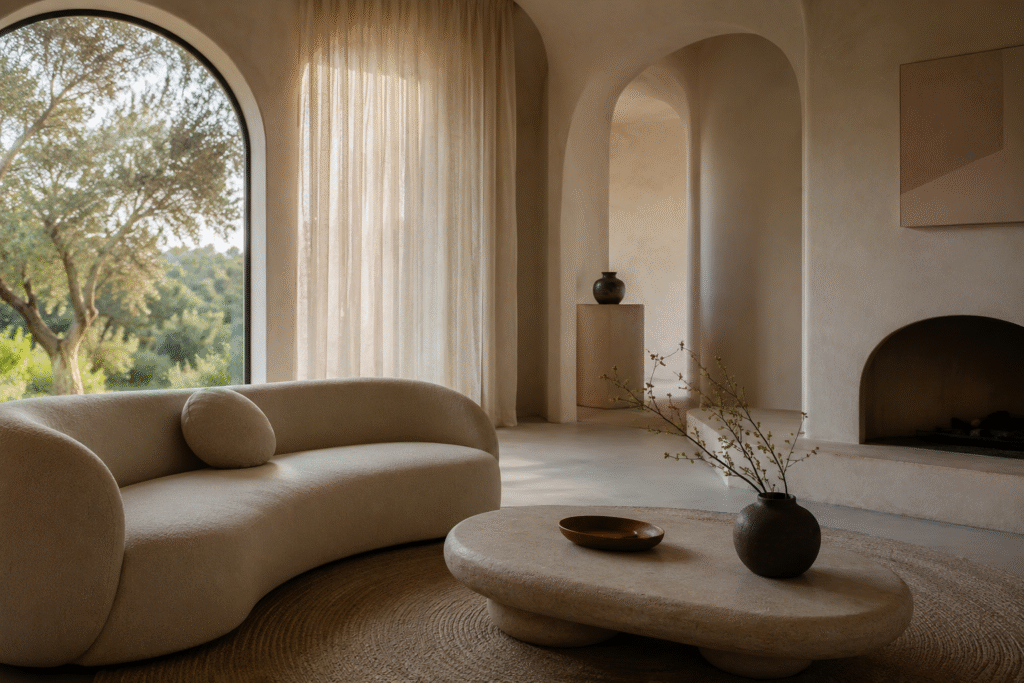
I’ve always felt drawn to interiors softened by gentle curves and organic forms. A rounded coffee table, the silhouette of a sculptural chair, the imperfect shape of a handmade ceramic vase. None of these elements ask for attention, yet together they create a quiet sense of ease that makes a room feel instantly more welcoming.
What fascinated me was discovering that this isn’t simply a matter of personal taste.
For thousands of years, our brains evolved surrounded by nature. Flowing rivers, rolling landscapes and the irregular shapes of trees became the visual language we instinctively understood. Even today, we continue to respond to these forms, often without consciously realising it.
Research suggests that curved shapes are generally perceived as softer and more approachable, while sharp angles can subtly trigger a greater sense of alertness. It’s a small psychological response, but one that quietly influences how comfortable we feel in a space. Perhaps that’s why interiors filled with organic forms often feel so calming before we can even explain why.
Since learning this, I’ve started noticing these details everywhere. The gentle arch between two rooms, the curve of a sofa inviting conversation, the soft silhouette of a linen lampshade. Individually they seem insignificant, yet together they create an atmosphere that feels effortless, balanced and deeply human.
The more I think about it, the more I believe that our love for organic design isn’t simply another interior trend. Maybe it’s our way of bringing a little more of the natural world back into our everyday lives. A quiet reminder of the landscapes we’ve always belonged to, even within the walls of our homes.
The more I explore the psychology behind interior design, the more I realise that the most meaningful spaces rarely ask to be admired. Instead, they gently invite us to slow down, to linger, and simply to feel.